

Tiny Patients, Big Responsibilities: A Look Inside Pediatric Anesthesia


Today, we have a guest post from Becky Motykiewicz, a pediatric CRNA with 15 years of clinical experience. She’s not just a clinician—she’s also an Assistant Professor in a nurse anesthesia program and the developer of a pediatric anesthesia calculator app. She’s here to walk us through what actually happens when you hand your child over for surgery. Most parents have no idea what happens behind those OR doors. Becky does.
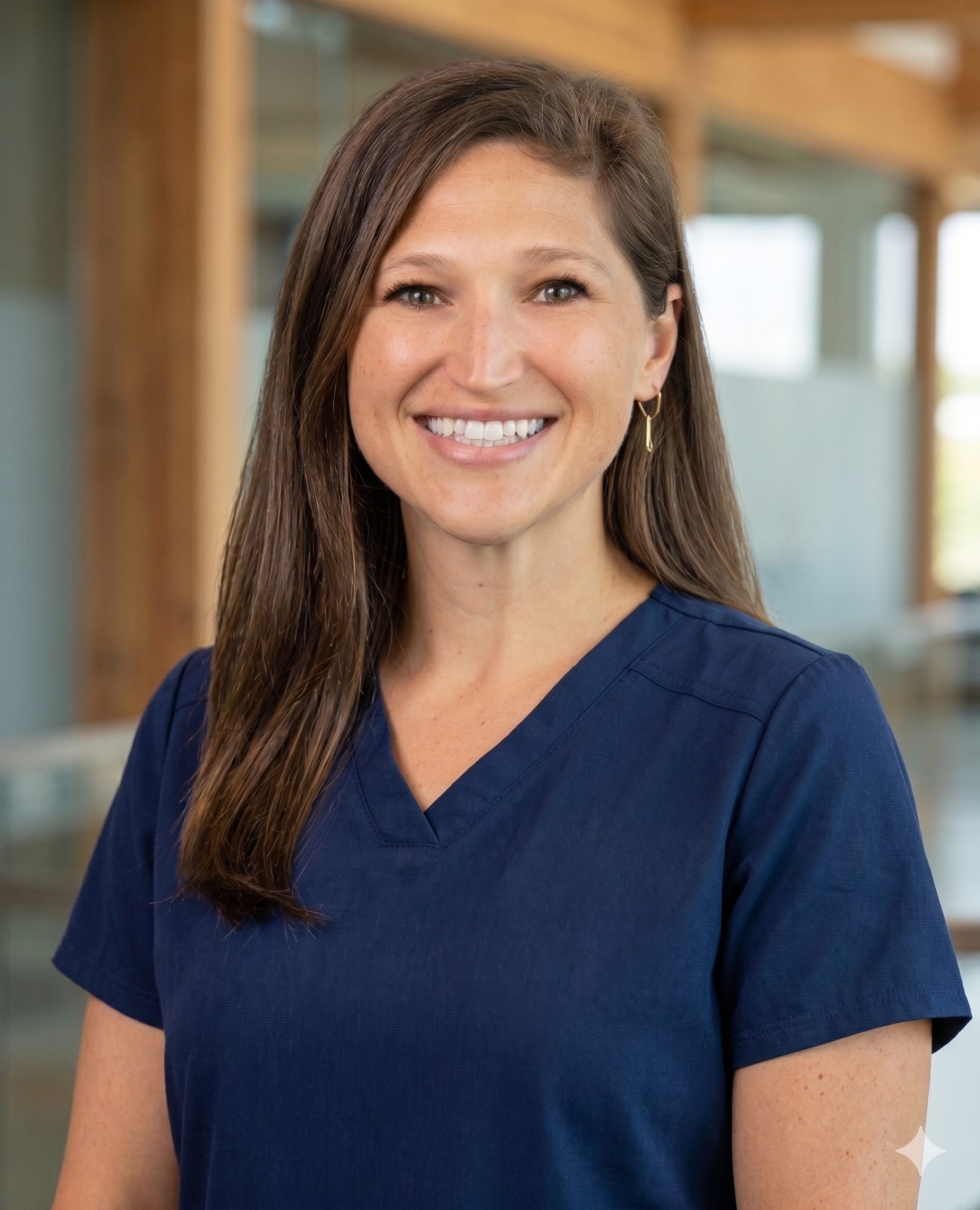
Guest post by Becky Motykiewicz, DNAP, CRNA
I have been a pediatric CRNA for 15 years. I love pediatric anesthesia. I love the little patients, the math I have to use to calculate their dosages, and the tiny supplies I navigate. It’s challenging, the patients are cute, and I could not imagine doing anything else as a CRNA.
I also know what a huge responsibility I have each time I take someone’s kid, whether an infant or an 18-year-old, to the operating room (OR). As a parent, you have to give your full trust to a stranger to take care of your child. Most parents have no clue what happens after we take their kid back to the OR. Let me give you a little insight.
Phase 0: Preoperative Sedation (The “Giggle Juice”)
Before we even head back to the bright lights of the operating room, our goal is to keep your child as calm and comfortable as possible. This is where we frequently collaborate with Child Life Specialists, dedicated pediatric healthcare professionals trained in child development who use play, education, and psychological preparation to help kids understand their procedures in a developmentally appropriate way.
One of the most effective non-pharmacological tools we use to combat preoperative anxiety is digital distraction. Engaging a child with an interactive game on a tablet, showing them their favorite cartoon on a smartphone (I’m pretty partial to Bluey), or even using virtual reality can profoundly redirect their attention away from the unfamiliar hospital environment. Studies have actually shown that using active tablet-based distractions or virtual reality can be just as effective at reducing preoperative anxiety as traditional sedative medications, and sometimes lead to smoother anesthesia induction and faster postoperative recovery.
If a child is exceptionally anxious or too young to benefit from digital distraction, we often give them a little something extra to help them relax. We call it preoperative sedation, and the most common medication we use is an oral liquid called midazolam (Versed). Kids often call it “giggle juice” or “silly syrup.” This medication does two wonderful things:
It significantly reduces separation anxiety, making it much easier for the child to leave their parents
It provides excellent anterograde amnesia—meaning they likely won’t remember the trip to the OR or leaving their caregivers.
Phase 1: Going to Sleep (Induction)
Once we’re in the OR, the first step in any anesthetic plan is induction—the process of safely transitioning a patient from awake to asleep. For most adults, this involves placing an intravenous (IV) line and administering medication directly into the bloodstream. In pediatrics, we have a much gentler option: the mask induction.
Children are understandably anxious about needles. We typically avoid placing an IV while they are awake, and instead, use a specialized breathing mask. We let the child pick a flavor for the inside of the mask (like bubblegum, strawberry, or watermelon). We also turn it into a game, asking them to practice being an astronaut by putting on a space mask or blowing up a giant imaginary balloon. As they breathe the sweet-smelling anesthetic gas, they drift off to sleep within a minute or two.
Once the child is fully asleep in the OR and unaware of their surroundings, we step in to safely place the IV and all the monitors to watch their vital signs during the procedure. We give medications to facilitate the placement of an airway device, such as an endotracheal tube or subglottic airway, to help protect and maintain their breathing while they are asleep.
Phase 2: During Surgery (Maintenance)
Once they are safely asleep, the surgical procedure begins. This phase is known as maintenance, and this is where my love for math and the tiny supplies really comes into play.
In my role mentoring and educating Resident Registered Nurse Anesthetists (RRNAs), I constantly emphasize that children are not just tiny adults. Their physiology, anatomy, and pharmacology are entirely unique. In adults, medication doses are somewhat standard. In pediatrics, every single medication, fluid drop, and breathing tube is meticulously calculated based on the child’s exact weight in kilograms.
A dose of pain medication for a 5-kilogram infant is vastly different from a dose for a 40-kilogram teenager. The mental workload and calculations required during this phase are substantial. In fact, ensuring this level of mathematical precision is so important to me that I developed a pediatric anesthesia calculator app to help practitioners manage these complex formulas accurately on the fly.
While the surgeon is entirely focused on the operation, the anesthesia provider’s sole focus is on your child. We continuously monitor their vital signs— heart rate, blood pressure, oxygen saturation, and temperature. Children lose body heat much faster than adults, so we utilize forced-air warming blankets and specialized fluid warmers to keep their core temperature stable. We adjust the depth of anesthesia second by second, ensuring the child remains entirely unaware, comfortable, and perfectly stable throughout the procedure.
Phase 3: Waking Up (Emergence)
As the surgeon finishes their work, we transition into the emergence phase. We turn off the anesthetic gases and begin administering pure oxygen. Long before the surgery ends, we have already executed a comprehensive, multimodal pain management plan. This might include intravenous acetaminophen, local numbing medicine applied by the surgeon, or specialized nerve blocks. Our goal is to ensure the child has a strong foundation of pain control on board before they even open their eyes.
Waking up from anesthesia can sometimes be disorienting for a child. Occasionally, they may experience “emergence delirium,” a temporary state in which they wake up crying, thrashing, or seemingly confused. While this can be difficult for parents to witness in the recovery area, it is simply a byproduct of the anesthetic gas clearing from their brains. It does not necessarily mean they are in pain; they are just caught in a twilight state between being deeply asleep and fully awake.
We monitor the child closely in the Post-Anesthesia Care Unit (PACU) until their breathing is regular, their vital signs are perfectly stable, and they are fully awake. We also know the most comforting thing for a child in an unfamiliar environment is a familiar face, so we work swiftly to reunite them with their parents as soon as it is clinically safe.
The Weight of Trust
Handing your child over for surgery requires immense vulnerability. When I take your child through those double doors, I carry that weight with me. Behind the surgical drapes is a highly trained, deeply vigilant professional focused on nothing else but bringing your child back to you safely.
Thanks to Becky for this insider look at pediatric anesthesia. Subscribe to The Art of Anesthesia for weekly posts breaking down what happens in the OR—perspectives you won’t find anywhere else. New posts every Thursday. It’s free.
About the Author
Becky Motykiewicz, DNAP, CRNA, is a pediatric nurse anesthesiologist with 15 years of clinical experience. She currently serves as a full-time Assistant Professor in a nurse anesthesia program and practices clinically in Philadelphia, where she is dedicated to evidence-based curriculum design and researching system-level interventions for healthcare burnout. Passionate about making education accessible through multiple modalities, she is also the developer of an app for a pediatric anesthesia calculator.
Connect with her on LinkedIn and Instagram.
 | A guest post by
|
I love this post! I'm a midwife so I work closely with our amazing anaesthetists (aka gods!!) Whether it's siting an epidural or dealing with an emergency cesarean under GA, you guys are awesome!
I’m a CRNA with a 25 year career with experience as a CRNA on our Peds Team at a Level 1 hospital and then at an Outpatient Surgery Center that did 50% Peds volume specializing in ENT! I know what Becky is writing about and she speaks the truth!